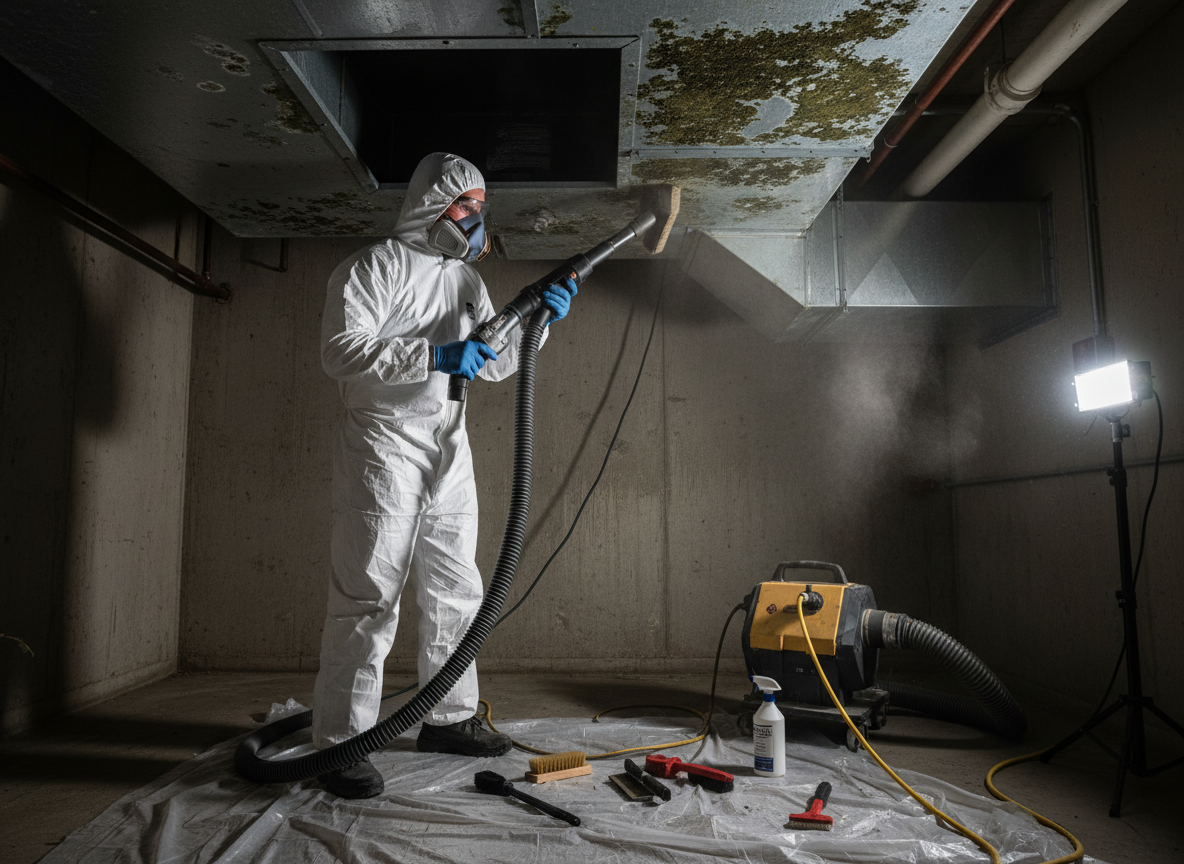
Ventilation systems in Edison homes often trap mold because the San Joaquin Valley's hot arid summers drive heavy air conditioning use while mild winters allow moisture to linger in ducts without full drying cycles. Older housing stock near Edison Hwy and toward Bakersfield frequently features metal ductwork installed before modern sealing standards, creating joints where valley dust mixes with condensate. Remediation requires isolating each run, HEPA vacuuming, and applying EPA-registered antimicrobials without introducing new moisture that could restart growth during the next heat wave.
Access points matter in this terrain. Many properties sit on flat valley lots with crawl spaces or low attics that collect irrigation runoff from surrounding agriculture, feeding hidden colonies behind registers. Technicians must map the entire trunk and branch layout first because cutting corners on a single elbow can leave spores that recirculate once the system restarts. Negative air machines stay running throughout to protect adjacent living spaces from cross-contamination common in tightly built mid-century homes.
Post-remediation verification uses both visual inspection and air sampling because the dry climate masks musty odors until humidity spikes again. Homeowners should avoid running the fan until clearance is confirmed; otherwise settled particles can re-enter living areas. This step prevents callbacks that occur when only visible surface growth is treated without addressing the full ventilation path.
Technician insight
In EDISON, the thing that catches most people out with ventilation mold remediation is the valley dust that cakes inside return ducts during summer AC runs. When mild winter temperatures let condensate sit, that dust becomes the perfect medium. Homeowners often clean only the visible registers and miss the trunk lines running through crawl spaces fed by irrigation seepage from nearby fields.
Hidden Growth in Return Trunk
A homeowner in Edison noticed allergy spikes when the AC ran. Inspection found heavy mold on the main return duct under the house where irrigation water had pooled against the foundation. The run was isolated, vacuumed, treated, and cleared; the system now pulls clean air without recirculating spores.
How it works
- 1
Inspection and Mapping
Technicians examine every accessible duct section, register, and return using cameras and moisture meters to locate growth without disturbing settled spores.
- 2
Containment Setup
Negative air machines and sealed barriers isolate the ventilation system from living spaces to prevent spread during cleaning.
- 3
Source Removal and Treatment
HEPA vacuuming followed by antimicrobial application targets mold on metal and flex duct surfaces while preserving insulation where possible.
- 4
Verification and Restart
Clearance testing confirms spore levels match outdoor baselines before the system is returned to normal operation.
Pricing
Cost depends on system size, number of access points required, and whether flex duct replacement becomes necessary.