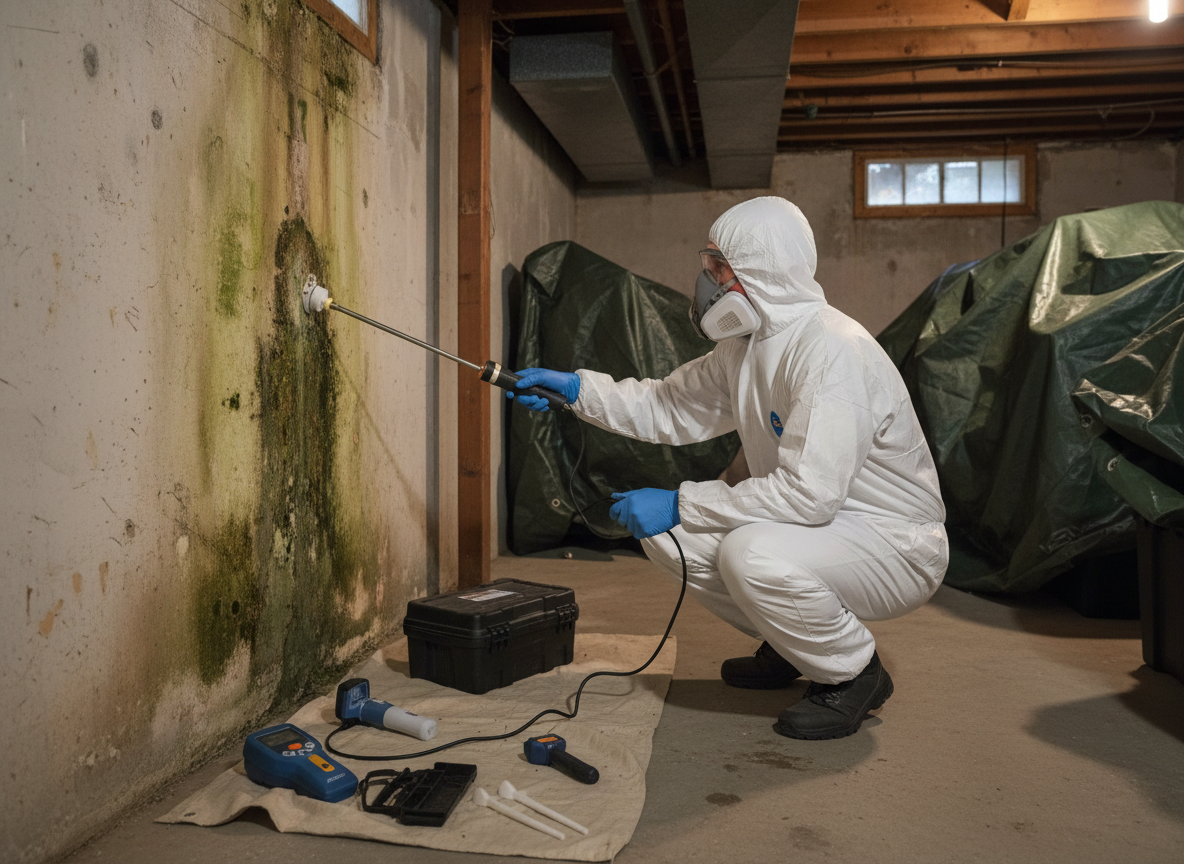
Mold testing in the San Joaquin Valley requires attention to how hot arid summers drive residents to seal homes tightly, trapping humidity from irrigation runoff or mild winter rains. In Edison neighborhoods near Bakersfield, older housing stock often features crawl spaces and attics where temperature swings create condensation points behind drywall and under flooring. Technicians use moisture meters and infrared cameras first to locate hidden dampness before collecting air or surface samples for lab analysis. This approach identifies whether visible discoloration stems from active growth or settled spores common in dusty valley conditions.
Edge cases arise in Kern County properties where agricultural dust infiltrates vents, complicating readings and requiring multiple sample locations. California building codes emphasize proper ventilation in newer builds, yet many Edison homes predate these updates and show mold along rooflines after rare heavy rains. Testing distinguishes between allergenic and toxic species through chain-of-custody protocols sent to accredited labs. Homeowners receive written reports detailing spore counts compared against outdoor baselines, helping prioritize remediation only where counts exceed normal thresholds.
Seasonal patterns matter: summer heat bakes surfaces dry but leaves residual moisture in shaded foundations, while mild winters allow slow leaks from aging pipes to go unnoticed until musty odors appear. Testing protocols include checking HVAC systems, a frequent vector in valley homes that recirculate spores across rooms. Reports also note any code-related concerns such as inadequate exhaust fans in bathrooms, common in local stock.
Technician insight
In EDISON the thing that catches most people out with Mold Testing is how the hot arid summers mask slow leaks until mild winter moisture finally triggers growth in older crawl spaces; homeowners often skip checking under the house because the ground looks dry year-round, yet irrigation from nearby fields keeps soil damp enough to wick into sill plates.
Hidden Attic Growth After Irrigation Leak
A homeowner in Edison noticed musty smells near the hallway but no visible stains. Inspection located elevated moisture along the roof deck from a slow irrigation line seepage uphill. Air samples confirmed higher indoor spore counts; surface tape lifts identified Stachybotrys in insulation. Containment and removal followed the testing report.
How it works
- 1
Initial Assessment
Technician arrives at the Edison property and interviews occupants about symptoms and water history while walking through accessible areas.
- 2
Moisture Mapping
Use of meters and thermal imaging identifies damp zones in attics, crawl spaces, and walls without invasive cuts.
- 3
Sample Collection
Air cassettes, tape lifts, and bulk material samples are gathered from multiple interior and exterior locations for lab comparison.
- 4
Lab Analysis and Report
Samples undergo microscopic examination; a detailed report arrives within days outlining findings and recommended next steps.
Pricing
Cost depends on square footage, number of samples required, and whether crawl space or attic access is needed.