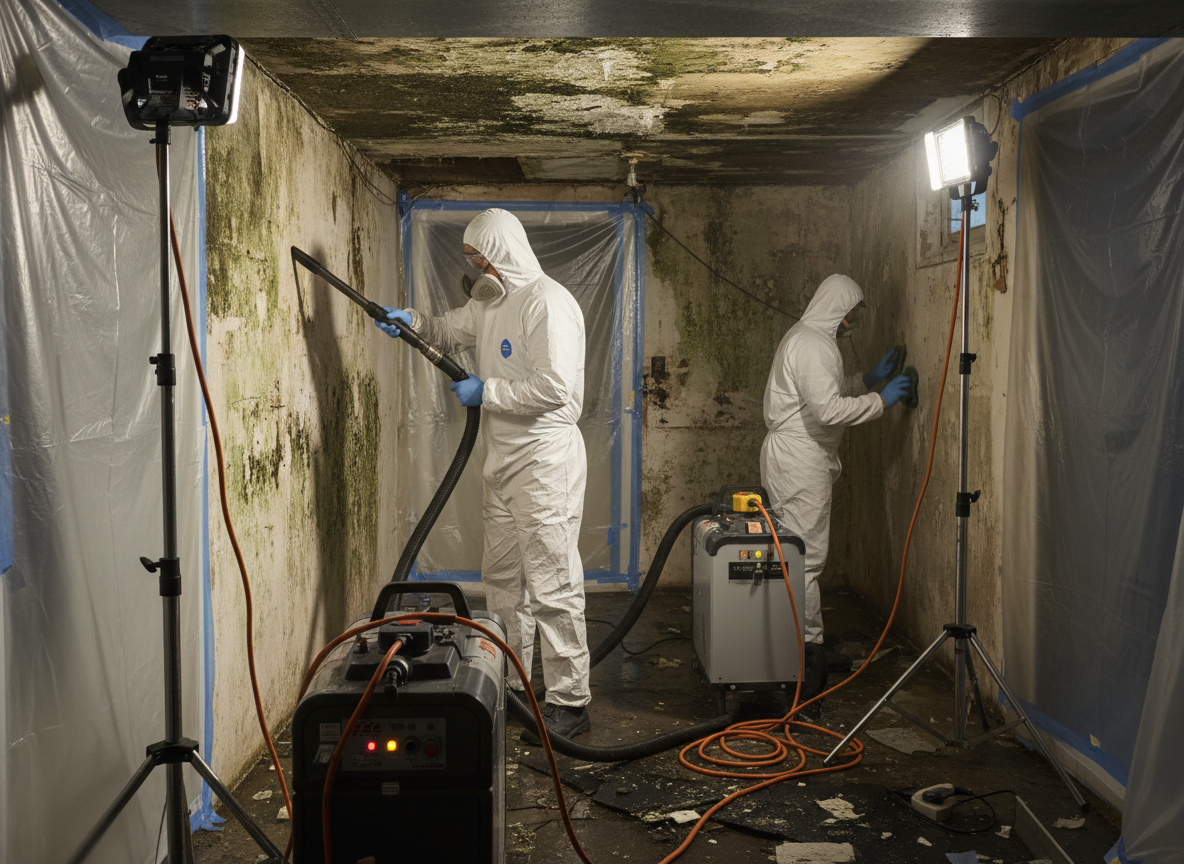
In Edison and surrounding Kern County neighborhoods, mold often develops in crawlspaces and behind walls of homes built before the 1980s when irrigation from nearby farmland raises soil moisture levels even during the hot arid summers of the San Joaquin Valley. Mild winters reduce natural drying, allowing hidden growth after minor leaks from aging plumbing common in the area. Remediation requires full containment to prevent spores from spreading through ductwork typical in these single-story ranch houses, followed by HEPA filtration and removal of affected drywall or insulation rather than surface cleaning alone.
Local conditions in Edison mean that post-rain events, even infrequent ones, can push water under slab foundations, leading to mold that standard visual checks miss. Technicians must use moisture meters and thermal imaging on concrete and wood framing, then apply antimicrobial treatments rated for the valley's low-humidity environment to avoid re-growth. Homeowners often overlook attic ventilation issues exacerbated by dust from surrounding agriculture, which traps humidity and creates edge cases where mold travels through ceiling cavities into living spaces.
Code compliance in Kern County requires documentation of all removed materials and post-remediation verification testing before any reconstruction begins. Failing to address the source, such as poor grading around Edison properties or leaking irrigation lines, leads to repeat issues within months. Work stays limited to the affected zones to minimize disruption in these compact homes, with daily progress updates provided from the base at 12299 Edison Hwy.
Technician insight
In EDISON, the thing that catches most people out with mold remediation near me is how farm irrigation keeps soil damp year-round under older slabs, so a small roof leak during a mild winter turns into widespread crawlspace mold that only shows up after the hot summer starts pushing humidity indoors.
Crawlspace Mold After Irrigation Leak
A resident in Edison noticed a musty smell following a nearby irrigation line break. Inspection revealed mold growth under the slab foundation common to pre-1980s Kern County homes. Containment was installed, affected insulation removed, and antimicrobial treatment applied to framing. Clearance testing allowed safe re-entry with no recurrence after source repair.
How it works
- 1
Initial Assessment
Technicians arrive within hours for a full inspection using moisture detection tools tailored to San Joaquin Valley soil conditions and Edison home construction.
- 2
Containment Setup
Plastic barriers and negative air machines isolate the work area to stop spore migration through typical ranch-style duct systems.
- 3
Removal and Treatment
Affected materials are removed, surfaces cleaned with EPA-registered antimicrobials, and hidden cavities addressed based on local irrigation-related moisture patterns.
- 4
Verification and Clearance
Independent testing confirms levels are safe before any rebuilding, with reports provided for Kern County records.
Pricing
Pricing depends on the extent of hidden growth, access challenges in older Edison homes, and whether slab or attic work is required.