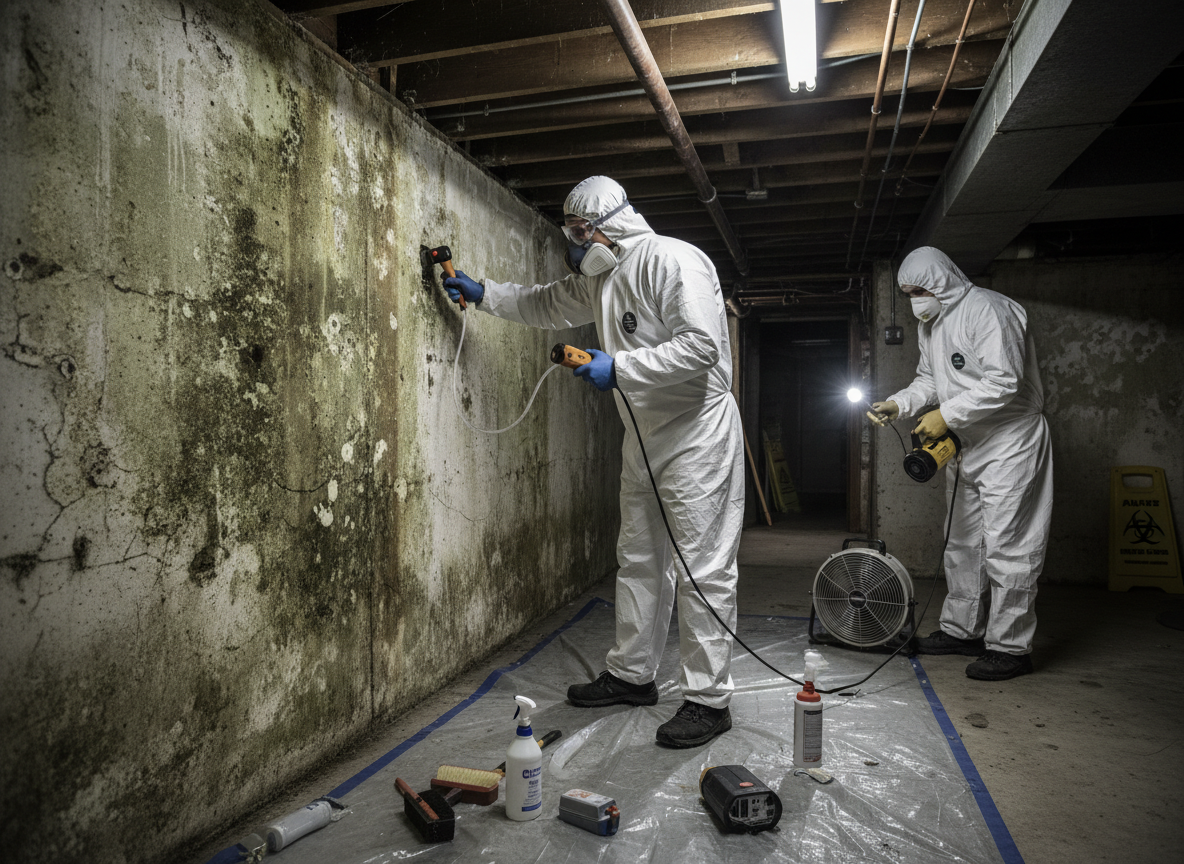
Basement mold inspection in Edison requires checking for hidden moisture trapped by the valley's mild winters and poor airflow in older agricultural homes. Many properties along Edison Hwy and surrounding neighborhoods sit on compacted soil that holds residual water from irrigation runoff, allowing spores to grow behind drywall or under flooring even when summers stay hot and dry. Inspectors must lift carpets, test wall cavities with moisture meters, and examine HVAC returns that pull air from below grade where temperatures stay cooler year round.
Homeowners in Kern County often overlook crawl space vents that pull in dust and humidity during the cooler months, feeding mold on wooden joists. A proper inspection maps every foundation crack and sump pump discharge point because the arid climate masks ongoing seepage until it reaches living areas. Technicians document visible growth, sample air quality, and note any prior flooding from nearby Bakersfield-area storms that can back up local drainage.
Common Inspection Triggers
Seasonal shifts from hot arid summers to mild winters create condensation cycles inside basements of pre-1980s homes common in Edison. Irrigation from surrounding fields raises soil moisture levels that wick into foundations, especially on flat terrain where water has nowhere to drain.
Technician insight
In EDISON, the thing that catches most people out with Basement mold inspection is how the flat San Joaquin Valley terrain lets irrigation water sit against older concrete foundations along Edison Hwy, creating hidden growth that only shows up once you pull back baseboards during a mild winter.
Hidden Growth Behind Drywall
A homeowner in Edison noticed a musty smell after a cool spell. We mapped moisture along the north foundation wall and found elevated readings behind paneling where field runoff had seeped in. Samples confirmed mold; we contained the area and referred them to full remediation without disturbing the rest of the house.
How it works
- 1
Initial Walkthrough
Technician arrives at the Edison address and reviews any history of leaks or odors with the homeowner.
- 2
Moisture Mapping
Use meters and infrared cameras to locate damp zones behind walls and under slabs common in valley soil.
- 3
Air and Surface Sampling
Collect samples from basement corners, HVAC returns, and any visible discoloration for lab analysis.
- 4
Report and Recommendations
Deliver written findings with photos and next steps for remediation if mold is confirmed.
Pricing
Upfront quotes provided after walkthrough; final cost depends on home size and number of samples required.